TEFL COURSES
Professional 200-Hour Online TEFL Course
BUY NOW
6 Month Access
£149.99
$199.99
3 INSTALMENTS
Billed monthly, 3 times
£49.99
$66.99
learners worldwide
£5
being donated to Fullcircle’s Charitable Foundation
learners worldwide
£5
being donated to Fullcircle’s Charitable Foundation
About Your Professional 200-Hour Online TEFL Course
Here's what you need to know about your course:
31 outstanding, fully practical modules
Designed by top TEFL experts
Designed to help you pass
Accredited by Gatehouse
No experience/degree needed
Truly modern and engaging
Our Professional 200-Hour Online TEFL Course TEFL certification opens up 3 exciting gateways for you:
- 1 You can teach overseas in face-to-face classrooms in exotic places such as Thailand and Vietnam. Wow!
- 2 You can teach online from home, or teach online when you are travelling to earn very useful, additional income.
- 3 You can do both! Teach in an overseas classroom and do some online teaching in your spare time. Sounds good!
This course offers you a delightful, life-changing experience. Start your TEFL journey now!

Your Learning Experience
24/7 access to your learning platform
Study at your own pace
Written by top TEFL experts
Tutor support whenever you need it
TJ
TJ J
Recommends
5.0
Great!!! And very motivated to learn very easy.
E
Elizabeth
Recommends
5.0
Great price, easy login to Full Circle - accredited !!!
200
HRS
A Comprehensive Course Syllabus
Our 32 outstanding modules will teach you how to understand your learners, the importance of context, lesson planning, teaching skills, assessment, and reflection. The Professional 200 Hour TEFL Online Course also includes the 120 Hour TEFL, the 40 Hour Teaching English to Young Learners (TEYL) Course and our 40 Hour Teaching Online Course. You’ll get 3 Certificates for 1 price.
Internationally accredited
Free activity & grammar book
VIP job assistance
Special course : TEYL
- Unit 1: English Language Characteristics
- Unit 2: Items Learners of English find difficult
- Unit 3: L1 and L2 Learning and Video 2
- Unit 4: Teaching Methodologies
- Unit 5: What is the Communicative Approach and Video 3?
- Unit 6: The Fundamentals of Teaching
- Unit 7: A few Teaching Techniques and Video 4
- Unit 8: The Importance of a Learner's Background and Video 5
- Unit 9: The Importance of Learner's Motivations
- Unit 10: Motivation Activity
- Unit 11: A Learner's Level and Literacy
- Unit 12: Discover the Role and Responsibilities of a TEFL Teacher and Video 6
- Unit 13: How to become an Outstanding Teacher and Video 7
- Unit 1: Managing Expectations and Video 8
- Unit 2: What are the Roles of Learners and Teachers
- Unit 3: Pattern of Classroom Activity
- Unit 4: The Behaviour of a Teacher
- Unit 5: Behaviour at the Site of Instruction
- Unit 6: Impulsiveness/Reflection
- Unit 7: Proxemics
- Unit 8: Volume
- Unit 9: Eye Contact
- Unit 10: Plan Ahead
- Unit 1: Organising your Classroom
- Unit 2: Communication and Giving Instructions
- Unit 3: Board Work
- Unit 4: Creating Excellent Displays
- Unit 5: Planning the Seating
- Unit 6: Making Clear Rules and Video 9
- Unit 7: The Best Motivation is Praise and Positive Language
- Unit 8: Building Rapport with your Learners and Video 10
- Unit 9: Other Teaching Aids Available
- Unit 10: Asking the right Concept Checking Questions
- Unit 11: How to use Modelling Effectively
- Unit 12: Drilling
- Unit 13: How do you Monitor your Students
- Unit 14: The Trade-Off between Error Correction and Feedback
- Unit 15: Control in the Classroom and Problems and Video 11
- Unit 16: Motivating your Students
- Unit 17: Looking after your Students
- Unit 18: Teaching Materials and Resources
- Unit 19: Testing and Assessment
- Unit 20: Top Tips
- Unit 1: Parts of Speech
- Unit 2: Adjectives
- Unit 3: Adverbs
- Unit 4: Conjunctions
- Unit 5: Determiners
- Unit 6: Interjections
- Unit 7: Prepositions and Video 12
- Unit 8: Nouns and Video 13
- Unit 9: Pronouns
- Unit 10: Verbs and Video 14
- Unit 11: Subject and Object
- Unit 12: Gerunds
- Unit 13: Comparatives and Superlatives
- Unit 14: Numbers
- Unit 15: Other Grammar Basics
- Unit 16: Infinitive
- Unit 17: Auxiliary Verbs and Video 15
- Unit 18: Present Participle
- Unit 19: Past Participle
- Unit 1: Summary of Verb Tenses and Video 16
- Unit 2: Present Structures
- Unit 3: Past Structures
- Unit 4: Future Structures
- Unit 5: Other Verb Structures
- Unit 1: Pre-Planning Stages
- Unit 2: Teaching Methodologies
- Unit 3: Timetable and Classroom
- Unit 4: Are your students young learners, teenagers or adults and Video 17?
- Unit 5: Teaching different age groups and Video 18
- Unit 6: Teaching different levels
- Unit 7: The Importance of Class Size
- Unit 8: The Importance Differentiation and Video 19
- Unit 9: Learning Styles
- Unit 10: Discovering Learning Styles
- Unit 11: SMART Aims and Objectives
- Unit 12: What kind of problems can you expect
- Unit 13: Pre-Planning Stage Lesson Plan
- Unit 1: Stages of the PPP Technique and Video 20
- Unit 2: How much time do I need?
- Unit 3: PPP
- Unit 4: What are Warmers and Coolers?
- Unit 5: Presentation Stage
- Unit 6: Controlled Practice Stage
- Unit 7: Production Stage
- Unit 8: End of the Lesson
- Unit 1: Lesson Structure
- Unit 2: Teaching Grammar and Video 21
- Unit 3: Form
- Unit 4: Meaning
- Unit 5: Pronunciation and Video 22
- Unit 6: Concept Checking
- Unit 1: Lesson Structure
- Unit 2: Teaching Vocabulary and Video 23
- Unit 3: Meaning
- Unit 4: Usage
- Unit 5: Form
- Unit 6: Pronunciation
- Unit 7: Concept Checking Questions
- Unit 1: Lesson Structure
- Unit 2: Teaching Phonology
- Unit 3: Drilling
- Unit 4: Phonemic Chart and how to use it?
- Unit 5: Spelling and Phonology
- Unit 6: Stress and Intonation
- Unit 1: Lesson Structure
- Unit 2: Teaching Speaking and Video 25
- Unit 1: Lesson Structure
- Unit 2: Choosing Writing Material and Video 26
- Unit 3: Teaching Writing
- Unit 4: Checking Writing
- Unit 1: Lesson Structure
- Unit 2: Choosing a Listening Activity and Video 27
- Unit 3: Teaching Listening
- Unit 1: Lesson Structure
- Unit 2: Choosing a Reading Activity and Video 28
- Unit 3: Teaching Reading
- Unit 1: Key Principles of Assessment and Video 29
- Unit 2: Correctness versus appropriateness and Video 30
- Unit 3: Standardisation
- Unit 4: Summative and Formative Assessment
- Unit 5: Test Compilation
- Unit 6: Need Analysis and Baseline Testing and Video 31
- Unit 7: Assessment
- Unit 8: Testing Progress and Video 32
- Unit 9: Global English Tests
- Unit 1: Teaching Different Group Sizes
- Unit 2: One-to-One
- Unit 3: Teaching Business English and Video 36
- Unit 1: Reflection and Video 37
- Unit 1: Definition of Young Learners
- Unit 2: TEYL Teaching situations
- Unit 3: Teaching Abroad
- Unit 4: The Future is Lifelong Learning
- Unit 1: Theories of Learning and Development
- Unit 2: Learning and Development Theory 1
- Unit 3: Learning and Development Theory 2
- Unit 4: Learning and Development Theory 3
- Unit 5: Learning and Development Theory 4
- Unit 6: Key Learning Principles
- Unit 7: Asking for help
- Unit 8: Teaching Outside
- Unit 1: Language 1 Formation
- Unit 2: The Importance of Understanding L1 Acquisition
- Unit 3: Different Behaviours
- Unit 1: Lesson Planning
- Unit 2: Projects
- Unit 3: Key Points
- Unit 4: Build a Strong Foundation
- Unit 5: Listening and its Sub-Skills
- Unit 6: Strategies
- Unit 7: Active Listening
- Unit 8: Supporting Listening
- Unit 9: Structuring Listening Lessons
- Unit 10: Total Physical Response
- Unit 11: Listening Activities for Younger Learners
- Unit 12: Listening Activities for Older Learners
- Unit 13: Listening Games
- Unit 1: Speaking Skills
- Unit 2: Getting your Learners Speaking
- Unit 3: Phonology
- Unit 4: Strategies
- Unit 5: Phonemic Awareness
- Unit 6: Activities
- Unit 7: Speaking Skills Strategies
- Unit 8: Speaking Activities for Younger Learners
- Unit 9: Speaking Activities for Older Learners
- Unit 10: Speaking Games
- Unit 1: Key Points
- Unit 2: Punctuation
- Unit 3: Spelling
- Unit 4: Types of Writing
- Unit 5: Writing for a Purpose
- Unit 6: Writing Approaches and Processes
- Unit 7: Macro and Micro Skills
- Unit 8: Strategies
- Unit 9: Writing Activities for Younger Learners
- Unit 10: Writing Activities for Older Learners
- Unit 11: Some Writing Activities And Exercises
- Unit 1: Key Points
- Unit 2: Reading Sub-Skills
- Unit 3: Why do we read?
- Unit 4: Who does the Reading?
- Unit 5: Choosing a Class Book
- Unit 6: Preparation
- Unit 7: Teaching Reading
- Unit 8: Reading Activities with Younger Learners
- Unit 9: Reading Activities with Older Learners
- Unit 10: Structuring a Lesson
- Unit 11: Exercises/Activities
- Unit 1: The Advantages of a good Book
- Unit 2: What creates an appealing book?
- Unit 3: Choosing a Class Book
- Unit 4: Strategies
- Unit 5: Activities
- Unit 1: Understanding and defining Teaching Online
- Unit 2: Discovering the benefits to you from teaching EFL online
- Unit 3: Discovering the benefits to students from being taught EFL online
- Unit 4: Creating intrinsic motivation and lifelong learning
- Unit 5: Two main platforms and approaches: How it works
- True Story
- Unit 1: Setting up and feeling confident with Technology
- Unit 2: Prevention and Fixing Issues with ease
- Unit 3: Prevention in just a few easy steps
- Unit 4: How to keep your Technology up to date
- Unit 5: Backup plans and dealing with the unexpected
- True Story
- Unit 1: Relationships, rapport and your online community
- Unit 2: The Start of the lesson is essential
- Unit 3: Lesson scaffolding: Learn the Scaffolding approach with ease
- Unit 4: Grammar confidence
- Unit 5: Recycling new vocabulary
- Unit 6: Concept Checking Questions: (CCQs)
- Unit 7: Error Correction
- Unit 8: Maximise learner participation and engagement
- Unit 9: What's best for beginners
- True Story
- Unit 1: How to feel confident in your new role
- Unit 2: Preparation is key
- Unit 3: Rehearsal is important; we’ll teach you how!
- Unit 4: Time Management will help you
- Unit 5: Learners need authentic conversation
- Unit 6: Having fun and getting everyone to relax
- Unit 7: What happens if students can't see you
- Unit 8: Good Communication
- Unit 9: Lost for words
- Unit 10: Empathy and the key to success
- Unit 11: Being Culturally aware at all times
- True Story
- Unit 1: Key points for the future
- Unit 2: Lifelong Learning and CPD
- True Story
KICKSTART YOUR CAREER
Get Professional 200-Hour Online TEFL Course
BUY NOW
6 Month Access
£149.99
$199.99
KICKSTART YOUR CAREER
Get Professional 200-Hour Online TEFL Course
200-hour
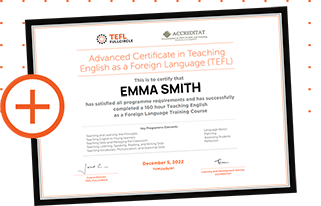
A Professional 200-Hour Online TEFL CourseCertificate
The Accredited Online TEFL Courses from TEFL Fullcircle are for individuals who have no previous
teaching experience. With a 99%
pass rate we feel positive that this course will prepare you for your Future Job.
TEFL JOBS
Finding the right TEFL job for you, abroad or online.
From China to South Korea, Japan to Thailand, and everywhere
in-between; our course graduates have been there and done
it, online or abroad.
We helped most of them to secure a job teaching English
online, teaching abroad, or both.,
They enjoy the great satisfaction of making a difference.
They receive a relatively good income.
Their experience has been life-changing for them and their
students.
There are over 5000 jobs available in 20+ countries – we
can help you secure one of these.
We can support and guide you every step of the way.
Teach Abroad
TEFL JOBS →
Teach Online
TEFL JOBS →
Our excellent reviews
4.4•1,600+ reviews
S
Socorro
Recommends
5.0
Fantastic! I contacted TEFL full circle and they were very happy with my purchase as well very kind with resolving the problem. The site is very nice and easy to use. Well worth what I paid for. Looking forward to completing the program.
WANT TO LEARN MORE?
Introducing Fullcircle Courses
Life Coaching
£49.99
$69.99
The Life Coaching Course from Enjoy Online Courses is a comprehensive, effective and enjoyable training guide to becoming a Life Coach and setting up your Life Coaching Business. Highly recommended.
Key aims of our Life Coaching course
To enable you:
to know and understand what Life Coaching is
to apply the necessary skills and attributes you need to become an excellent Life Coach
to know, understand and apply a solid track for Life Coaching
To apply all this knowledge, understanding and skills, including marketing skills, in setting up your Life Coaching business
Enjoy Online Courses says:
“Life Coaching is partnering with clients in a thought-provoking and creative way that inspires them to maximise their personal and professional potential. This is achieved by well-planned conversations and understanding your clients and their own personal experience of growth throughout the coaching episodes.â€
Career Development
A Life Coach can expect to earn between $100-$500 per hour. As a Life Coach you will be helping individuals and groups with the following: individuals who wish to enhance some personal attribute or wish to overcome some personal issue, business individuals and groups who wish to enhance some business attribute or skill or wish to overcome some business issue, sports persons who wish to enhance some personal or sporting attribute or wish to overcome some personal issue.
MORE
COURSE DETAILS
Starting your Own Business
£49.99
$69.99
Starting your Own Business is an essential toolkit for anyone with an idea they'd like to implement. It clearly outlines some of the most important areas to consider balanced, with a healthy pursuit of risk and reward.
Our key aim for this course is: To inspire you to offer sustainable competitive advantage in your startup
Competitive advantage is yourA lasting ability to outperformA all competition who are offering a similar product or service to what you intend to/will offer. This is done by implementing value-added strategies, not simultaneously being implemented by any current competitor. Your value-added strategies could include:
The extensive knowledge and abilities of you and your team (if you have one). This is the greatest source of competitive advantage.
A unique product or service. This uniqueness can be achieved by a specific enhancement.
Offering a similar product/service that your competitors offer but they cannot match the value for money you offer: higher quality at a more competitive price.
High quality customer service that competitors can't match. This is customer service that adheres every second of the day and night to the adage: The customer is King/Queen. This can be achieved by building a company culture where everyone is inspired to serve the customers to the utmost.
A company culture where everyone is inspired and motivated to innovate, and change swiftly and seamlessly, for the benefit of the customers.
Superb processes and technology that result in a product being produced faster, cheaper and better, or a service being delivered faster, cheaper and better.
Career Development
Starting your Own Business can be the most satisfying achievement on an individual's life as they see their ideas become reality. Starting your own business offers you the change to set your own salary!
MORE
COURSE DETAILS
Nutrition, Superfoods and Wellbeing
£49.99
$69.99
The Nutrition, Superfoods and Well-Being Course is an outstanding guide to how to achieve an all-round healthier lifestyle. The lifelong learning themed training will allow you to use your new skills at home or at work. High recommended!
According to the World Health Organisation (WHO), Nutrition is
the intake of food, considered in relation to the body's dietary needs. Good nutrition as an adequate, well balanced diet combined with regular physical activity is a cornerstone of good health. Poor nutrition can lead to reduced immunity, increased susceptibility to disease, impaired physical and mental development, and reduced productivity.
It's important here to define what we mean by diet. The purpose of this course is not to look at ways to lose weight but to consider how we can all work towards good and balanced nourishment through food and drink.
We want to look at ways you can adopt an all-round healthier lifestyle, which includes developing and sustaining a healthy eating pattern and being more active, with the overall goal of securing your overall wellbeing.
Career Development
The career and salary opportunities are excellent for Nutritionists as there is a growing need for expert nutritionists and lifestyle coaches. Poor nutrition can lead to a number of issues for people and you will have a chance to make a difference to these people. Salary expectations can be up to $50k++.
MORE
COURSE DETAILS
Read our informative Blogs
Frequently asked questions
What is TEFL or TESOL?
TEFL stands for Teaching English as a Foreign Language and TESOL stands for Teaching English to Speakers of Other Languages. Both the TEFL
Fullcircle 120 Hour and 160 Hour Courses will give you an Internationally Accredited Teaching Certificate, which will enable you to access
1000’s of jobs worldwide. TEFL is normally associated with the UK and TESOL is recognised in the USA, Canada, Australia and New Zealand.
They both mean the same thing.
Who can take the TEFL courses?
Most individuals who take the TEFL Course are native English speakers but if your first language is not English then we recommend that you
have the Cambridge Advanced English (CAE) Qualification or equivalent in your country. You can contact our team to check before you
purchase at
support@teflfullcircle.com
Where can TEFL take me?
Once you have completed the TEFL Fullcircle Certificate you can start teaching and travelling anywhere. TEFL Fullcircle will help you find
the skills you didn’t realise you had!
How old does a TEFL teacher have to be?
We feel positive that anyone over the age of 18 can benefit from TEFL. We have gap year students, life changers and retired individuals
taking the Courses. Everyone is welcome to start enjoying Teaching, whether it’s as a job or volunteering. We feel positive that anyone
who teaches will immediately find it an exciting and rewarding experience. TEFL Fullcircle would like anyone from any background or age to
experience TEFL.
Have more questions?
ASK THE TEFL EXPERTS - One of our experts will be delighted to talk about your plans
BUY NOW
6 Month Access
£149.99
$199.99